

Your Complete Guide to Adult Flag Football
Think of adult flag football as the high-octane, strategic cousin of traditional American football. You get all the good stuff—the clever plays, the deep passes, and the thrill of crossing the goal line—but without the bone-jarring tackles. Instead, players wear flags that opponents have to pull to make a "tackle." This one simple change makes the game faster, safer, and way more accessible for just about everyone.
Why Everyone Is Playing Adult Flag Football

Take a look at any local park on a weekend morning. You'll see it. The quick-cut routes, the perfect spirals, and that unmistakable sound of a flag getting ripped off a belt. Adult flag football isn't some niche hobby anymore; it’s a full-blown movement. It’s where former high school stars line up next to people who are just learning what a post route is.
But this isn’t just about reliving old glory days. The sport is exploding because it perfectly blends competition, fitness, and a real sense of community.
A Safer Way to Compete
Let’s be honest, one of the biggest reasons people jump in is the low-impact nature of the game. By swapping out full-contact tackling and blocking for flag-pulling, the risk of serious injuries drops dramatically. It’s a game-changer that opens the field to a much wider crowd.
You get to experience the chess match of football—the strategy, the speed, the execution—without the heavy physical toll. It’s the perfect balance: all the adrenaline, none of the brutal hits.
More Than Just a Game
Beyond the x's and o's, flag football leagues are becoming major social scenes. It’s a built-in way for adults to meet new people, build real friendships, and work together as a team—something that's often missing after we leave school. For many, it's a can't-miss weekly appointment for fun and a great workout.
It's this one-two punch of safe, intense competition and genuine social connection that’s fueling the sport’s massive growth. Flag football taps into that universal need we all have for community and a healthy outlet to compete.
The stats back it all up. Participation in the U.S. alone hit 7.3 million people in 2023. And on a global scale? Over 20 million people are playing the game, which shows just how massive and widespread its appeal has become. You can explore more statistics on this incredible growth trend to see just how big this thing is getting.
Learning the Rules and Field Essentials
So, you're ready to jump into adult flag football. It might seem like a lot at first, but don't worry—the rules are built for speed and action, not for burying you in a complex NFL-style rulebook. The goal is exactly what you think it is: get that ball into the other team's end zone.
The biggest game-changer is how a play ends. Forget bone-jarring tackles. Here, a play is over the moment a defender snatches one of the two flags from the ball carrier's belt. This one simple rule makes the sport incredibly accessible and safe, keeping all the fun and strategy of football without the brutal hits.
Understanding Downs and Field Position
Think of it like this: your offense gets four chances, or "downs," to move the ball past a certain point on the field—usually the midfield line. If you make it, you've earned a fresh set of four downs to try and score.
If you don't make it in those four attempts, the ball gets turned over to the other team right on the spot. This constant battle for field position is what makes every single play feel so important.
A huge thing for new players to remember is that there is no blocking or tackling. Your teammates can't physically get in a defender's way to clear a path. This puts the focus squarely on speed, agility, and smart plays instead of just raw power.
The Layout of the Field
While your local league might have some slight variations, a standard adult flag football field is a bit cozier than a pro field. They're typically around 80 yards long and 40 yards wide.
Here are the key zones you need to know:
- End Zones: These are the 10-yard deep scoring areas at both ends. Get the ball across the goal line, and you've got yourself a touchdown.
- Line of Scrimmage: This is the invisible line where the ball starts before each play. No one can cross it until the center snaps the ball.
- No-Run Zones: Many leagues throw in a fun strategic curveball with these. They are usually 5-yard zones right before the end zone and midfield where you must pass the ball. It forces teams to get creative when it counts the most.
After a touchdown, you get a shot at an extra point. You can play it safe and go for a 1-point conversion from up close (like the 5-yard line) or get gutsy and try for a 2-point conversion from further back (like the 10-yard line).
This is just the tip of the iceberg, of course. For a deeper dive, you can learn more about the specifics in our complete beginner's guide to flag football rules. Getting these basics down will have you playing with confidence from your very first game.
Finding The Right League And Format For You
Jumping into adult flag football is a blast, but it's important to know that not all leagues are built the same. The whole vibe of the game can change in a big way depending on the format and the league's atmosphere. The first step is figuring out what kind of environment syncs up with your skill level, your goals, and what you’re hoping to get out of the game.
One of the first decisions you'll run into is team size, which completely changes the speed and strategy of the game. A 5v5 format, for example, is usually played on a smaller field. This leads to a super fast-paced, high-scoring game where speed and agility are king.
On the flip side, larger formats like 7v7 or 8v8 really open up the field. They allow for more complex plays and defensive schemes, feeling a lot more like a strategic chess match than a track meet.
Choosing Your Competitive Level
Beyond just how many players are on the field, the competitive intensity of a league is a huge factor. Are you a former college athlete trying to chase a championship, or are you just looking for a fun way to stay active and make some new friends? Most areas will have a pretty clear range of options.
- Competitive Leagues: This is where the serious players go. Expect organized teams, detailed playbooks, and a high level of talent. Winning is the main objective here.
- Recreational Leagues: Absolutely perfect for beginners or anyone who wants a more laid-back experience. The focus is squarely on having fun, getting some exercise, and learning the game without the pressure.
- Co-ed Leagues: These leagues create a fantastic social setting and require a mix of men and women on the field at all times. They often have special rules in place to make sure everyone gets involved in the action.
The most important thing is to be honest with yourself about what you're looking for. It can be frustrating to join a hyper-competitive league when all you want is a casual Sunday game, just like a seasoned player might get bored in a league that's purely for fun.
This simple flowchart breaks down how a basic play unfolds, from the snap to a successful flag pull.
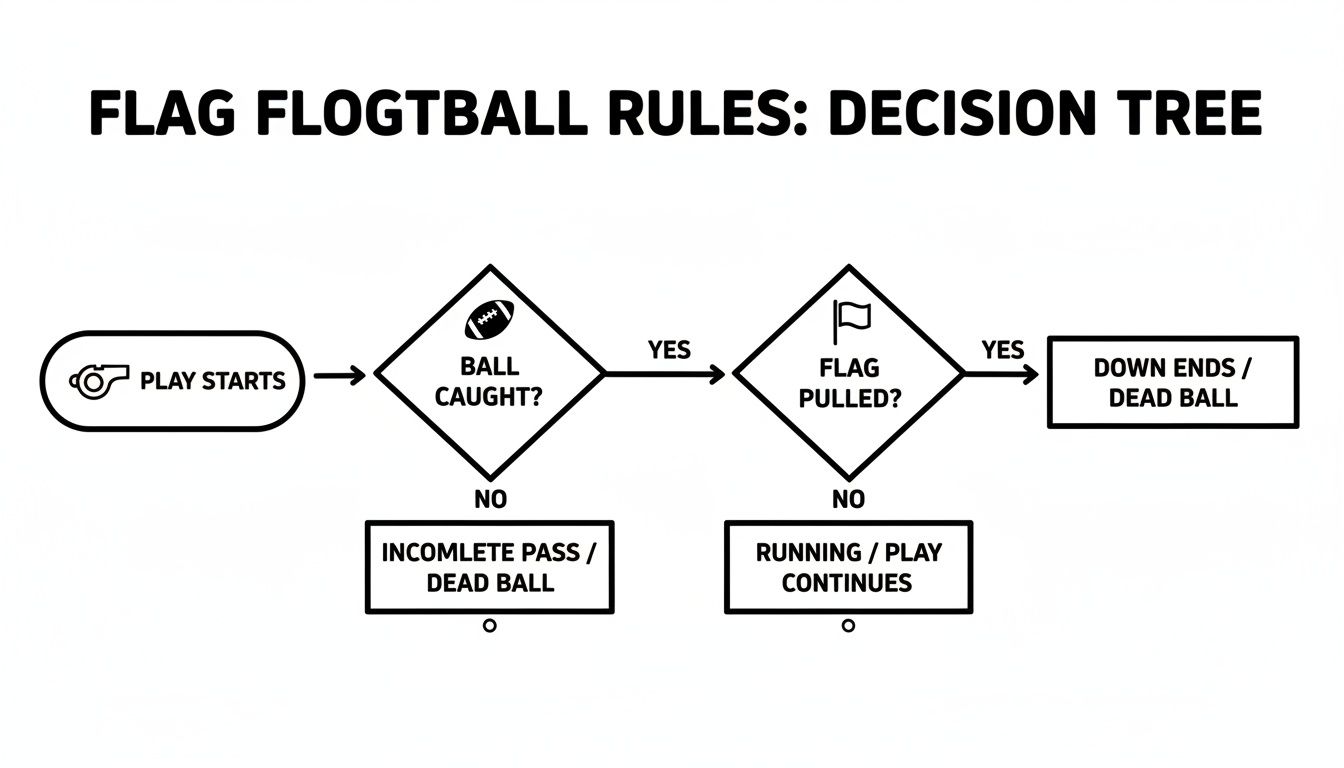
Getting a handle on this core sequence is the foundation for having a good time in any format you end up choosing.
Comparing Your Options
To help you narrow it down, here's a quick look at the different formats and what they offer. This should make it easier to find the perfect fit for your style of play.
Comparing Adult Flag Football Formats And League Types
| Format/League Type | Best For | Key Characteristics |
|---|---|---|
| 5v5 | Players who love speed, agility, and a high-scoring, fast-paced game. | Smaller fields, quick plays, heavy emphasis on one-on-one matchups. |
| 7v7 / 8v8 | Strategic players who enjoy complex playbooks and a more traditional feel. | Larger fields, more elaborate offensive and defensive schemes, balanced gameplay. |
| Competitive | Experienced players, former athletes, and anyone with a strong will to win. | Structured teams, regular practices, high skill level, and a championship-focused mindset. |
| Recreational | Beginners, casual players, and those focused on fun and fitness. | Relaxed atmosphere, lower pressure, emphasis on learning and participation. |
| Co-ed | Players looking for a fun, social environment that blends competition. | Mix of male and female players on the field, often with rules to ensure inclusive play. Great for teamwork and community. |
Ultimately, the goal is to find a league where you feel comfortable and can enjoy the game. A speedy 5v5 league might be awesome for conditioning, while a tactical 7v7 league is perfect for players who love the mental side of football. Many people find their sweet spot in co-ed leagues, which nail that balance between competition and a strong sense of community.
To get a better idea of what's out there, you can check out some of the key flag football leagues across the U.S. and see how they're structured. No matter what you're looking for, there's an adult flag football league out there waiting for you.
Gearing Up for Peak Performance and Style
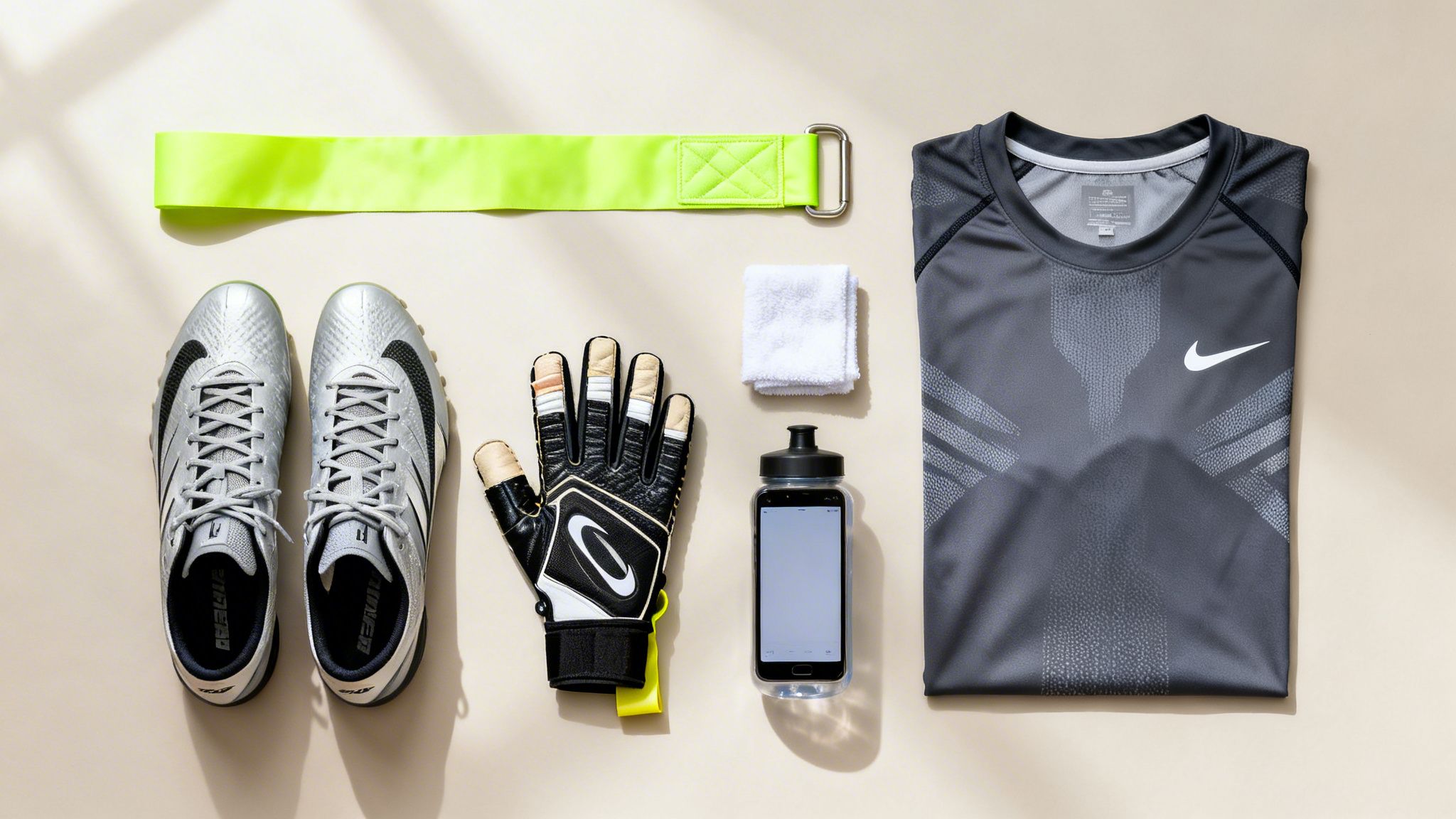
Let's be real—what you wear on the field is so much more than a uniform. It’s a huge part of your game. Gearing up for flag football isn't about having the flashiest new stuff; it’s about giving yourself a real edge, staying safe, and feeling locked in from the first whistle.
Think of your gear as your on-field toolkit. A mechanic wouldn't show up without the right wrench, and you shouldn't hit the field without the right equipment to make plays. Every piece has a job, whether it's giving you the grip to make that game-saving catch or just keeping you agile and comfortable. Your gear directly impacts how well you cut, catch, and compete.
The Non-Negotiable Essentials
You can skip the heavy pads from tackle football, but a few items are absolutely essential for playing your best and staying safe. Investing in good quality gear from the get-go makes a world of difference and helps you avoid those nagging injuries that can sideline you for the season.
-
Cleats: Your footwear is everything. Your everyday sneakers just won't cut it on grass or turf. You need football or soccer cleats with molded studs to get the traction for explosive starts, sharp cuts, and sudden stops. They're designed to dig into the ground, so you're not slipping all over the place when it matters most.
-
Receiver Gloves: These are a genuine game-changer, especially if you're playing on offense. That tacky silicone grip on the palms helps you snatch tough passes and gives you way more control of the ball. A good pair of gloves can easily turn a dropped pass into a touchdown.
-
Performance Apparel: Ditch the cotton t-shirts. Seriously. You want moisture-wicking shorts and jerseys made from technical fabrics that pull sweat away from your skin. This keeps you cool, dry, and focused on the game, not on how uncomfortable and weighed down you feel.
Gear That Defines Your Team
Beyond just performance, your gear is a statement. It's your team's identity. Rocking matching jerseys, shorts, and even custom team gloves brings everyone together and gives you a professional, unified look. There’s something to be said for walking onto the field looking like a team that means business.
Your gear becomes an extension of your team’s brand. It tells a story of unity, pride, and shared purpose before the first snap even happens. It’s about looking, feeling, and playing like a team.
Choosing the right apparel is a huge part of building that identity. If you're looking to gear up yourself or your whole squad, checking out a dedicated flag football collection is the perfect place to start. You can find everything from high-performance gear to standout styles that let you represent your team with pride.
Actionable Drills and Safety Tips for Every Player
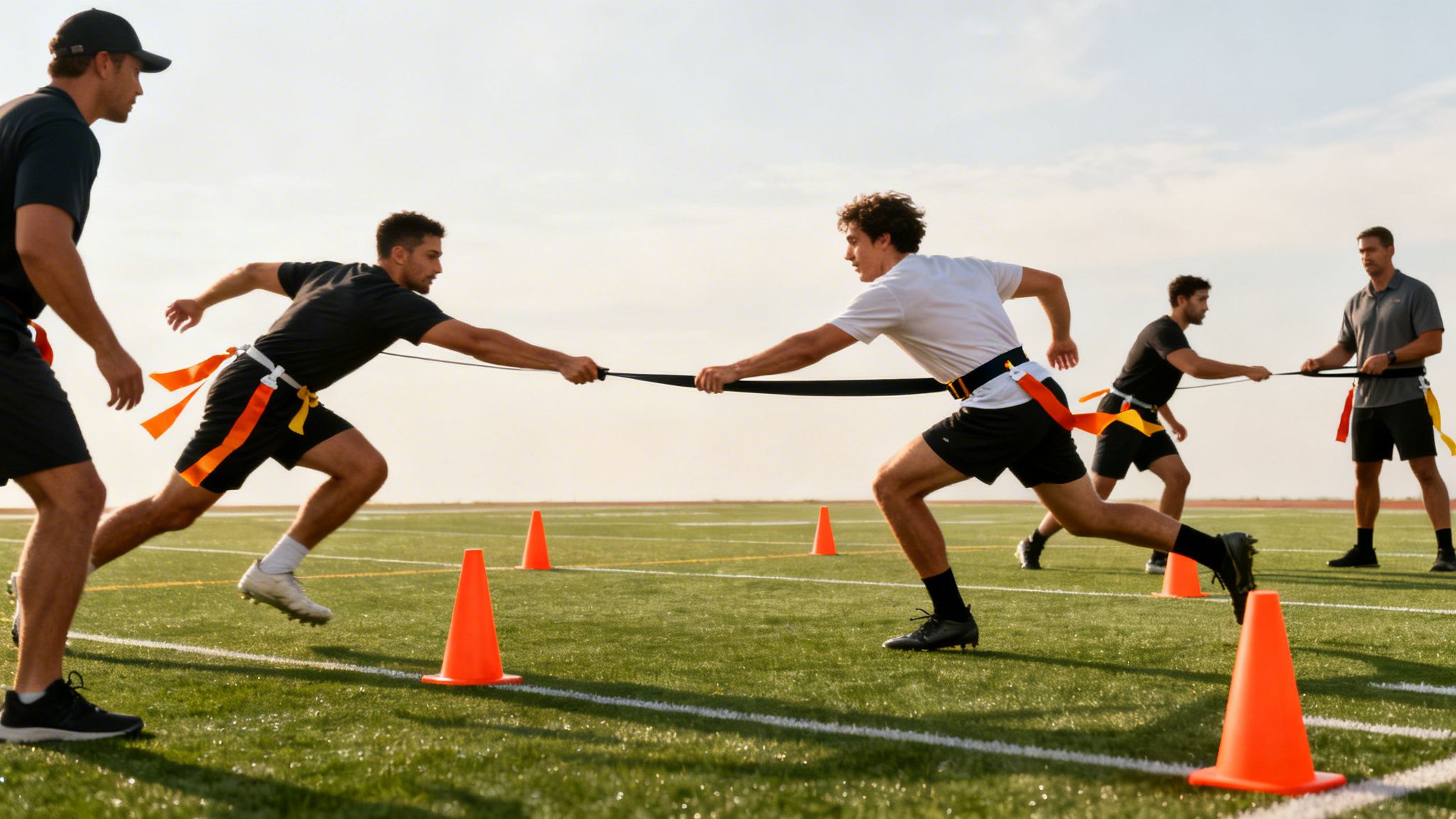
Throwing a perfect spiral or juking a defender looks cool, but what really separates good players from great ones is mastering the fundamentals. Consistent, focused practice is how you build the muscle memory to make those clutch plays feel like second nature when the pressure is on.
These drills aren't fancy, but they’re incredibly effective for targeting the core skills every single player needs. Whether you're a QB trying to thread the needle or a defender looking to become a flag-pulling machine, this is where you build your foundation.
Core Skill-Building Drills
Try weaving these into your warm-ups or practice sessions. They don’t require much equipment but offer a huge return on your on-field performance.
- Flag Pulling Drill: Find a partner and have them jog in a straight line while you come at them from an angle. Your job is to square up your hips, chop your feet to break down, and snatch that flag with a solid grip. This drill is all about learning to close the distance and secure the "tackle."
- Route Running Cone Weave: Set up a line of four to five cones, spacing them about five yards apart. Run crisp routes—slants, posts, outs—around them. The goal is to make sharp, clean cuts at every cone without slowing down.
- Agility Ladder Footwork: Quick feet are everything in this game, on both sides of the ball. Grab an agility ladder and run through different patterns like the Ickey Shuffle or high knees. It’ll do wonders for your coordination and your ability to change direction on a dime.
The point isn't just to go through the motions. You have to execute these drills with game-level intensity. If you can simulate the speed and pressure of a real match in practice, those skills will be there for you when it counts.
Prioritizing Safety on the Field
Sure, flag football gets rid of the big, bone-crunching hits, but injuries can still happen. Playing smart and safe is the only way to make sure you stay on the field all season.
It all starts before the first whistle even blows. Always kick things off with a dynamic warm-up—think jogging, high knees, and leg swings to get your muscles firing. Just as crucial is a post-game cool-down with static stretches to help with recovery and keep you flexible.
The biggest thing? Understanding and respecting the non-contact rules. There’s no blocking, so you have to rely on good positioning and speed, not brute force. This discipline doesn't just keep you from getting flagged; it's the best way to avoid sprains, strains, and other nagging injuries.
For a deeper dive, check out our guide on essential flag football safety guidelines. Staying informed is the first step to staying healthy.
Ready to stop watching from the sidelines and get into the huddle? Finding your spot in the world of adult flag football is a lot easier than you might think. Whether you're flying solo and want to join an existing squad or you're ready to rally your own crew, a simple game plan will get you on the field in no time.
Your search can start with just a few clicks. Websites and apps dedicated to recreational sports are basically gold mines for finding local leagues. A quick search for "adult flag football near me" will show you which organizations are running games in your area. Don't forget about social media, either—Facebook groups are an awesome way to connect directly with league organizers and current players.
Finding an Existing Team
If you're looking to join by yourself or with just a friend, the "free agent" route is your best bet. Most leagues keep a list of individual players who are looking for a team. Organizers often use these lists to help fill out roster spots or even create brand new teams from scratch.
Signing up as a free agent is a super low-pressure way to get involved. You’ll get placed with other players who are also new to the league, which makes for a welcoming and supportive vibe right from the first snap.
Building Your Own Squad
Feeling ambitious? Starting your own team puts you in the captain's chair. This is the perfect move if you've already got a group of friends, family, or coworkers who are fired up to play.
Here’s a quick guide to getting your team off the ground:
- Recruit Your Players: First things first, gather your group. You'll want to aim for a roster that's bigger than the on-field requirement—this ensures you always have enough subs for every game.
- Handle Registration: Head over to the league’s website and get your team registered. You'll probably need to pay a team fee and submit your final roster before the deadline hits.
- Design Your Gear: Now for the fun part! Work together to design custom jerseys and shorts. Nothing builds camaraderie faster than a unified look that makes your squad feel official.
The great thing is, you’re not just starting a team—you’re joining a massive, worldwide community. The global footprint of adult flag football includes 20 million participants across more than 200 countries, and organizations like NFL FLAG are fueling that growth from Canada to Australia. You can discover more about the international rise of flag football on PackedHouseSports.com to see how this incredible energy is making local leagues more exciting than ever.
Common Questions About Adult Flag Football
Stepping onto the field for the first time always brings up a few last-minute questions. It’s completely normal.
Think of this as your final huddle before kickoff—we're here to clear up any lingering doubts so you can hit the field with confidence. Let’s tackle some of the most common questions we hear from new players.
Do I Need Prior Football Experience to Play?
Absolutely not. One of the best things about adult flag football is how welcoming it is to newcomers.
Many leagues, especially in the recreational and co-ed divisions, are full of people who are just learning the game. The rules are simplified on purpose, and because there’s no contact, it’s the perfect way to get into football. It's all about having a great time, learning a new skill, and being part of a team.
What Is the Main Difference Between Co-ed and Men's Leagues?
The biggest distinction really comes down to who’s on your team and a few specific rules designed to keep the game inclusive for everyone.
- Co-ed Leagues: These leagues require a set number of female players on the field at all times. They often have special rules, like a female player needing to be involved in an offensive play every few downs, to make sure participation is balanced and fair.
- Men’s Leagues: These leagues don't have any gender requirements for their rosters. Depending on the league's competitive level, the style of play can sometimes be a bit more intense or faster-paced.
Ultimately, co-ed leagues are fantastic if you're looking for a more social, team-first atmosphere. Men's leagues might be a better fit if you're chasing a specific level of competition.
How Much Does It Cost to Join a League?
The cost can bounce around a bit depending on where you live and which league you join, but there’s a general range you can plan for. A single player’s registration fee usually lands somewhere between $60 and $150 for a full season.
This fee typically covers the essentials like renting the fields, paying the refs for each game, and league admin costs. But keep in mind, this fee almost never includes your personal gear.
You'll need to budget separately for your own equipment, like cleats, receiver gloves, and any performance apparel you want to wear.
At L2N2 LLC, we believe the right gear doesn't just help you play better—it makes you feel more confident. From high-grip gloves that secure every catch to performance apparel that keeps you cool under pressure, we have everything you need to hit the field ready to go. Gear up for your season by checking out our dedicated collections at https://l2n2.store.