

Track and Field Events Explained
Complete Event Guide for Athletes and Parents
Table of Contents
- Understanding Track and Field Games
- Track Events: Running Disciplines
- Field Events: Jumps and Throws
- Combined Events: Testing All-Around Athletes
- Essential Rules and Regulations
- Equipment and Gear for Young Athletes
- Training Requirements and Competition Structure
- Frequently Asked Questions
- Summary
Understanding Track and Field Games
Track and field games represent one of the oldest and most comprehensive athletic competitions in the world, dating back to 776 B.C. and the first Olympic games held in ancient Greece. For parents and young athletes stepping into this sport for the first time, understanding the breadth of track and field games is essential for choosing the right events and setting realistic goals.
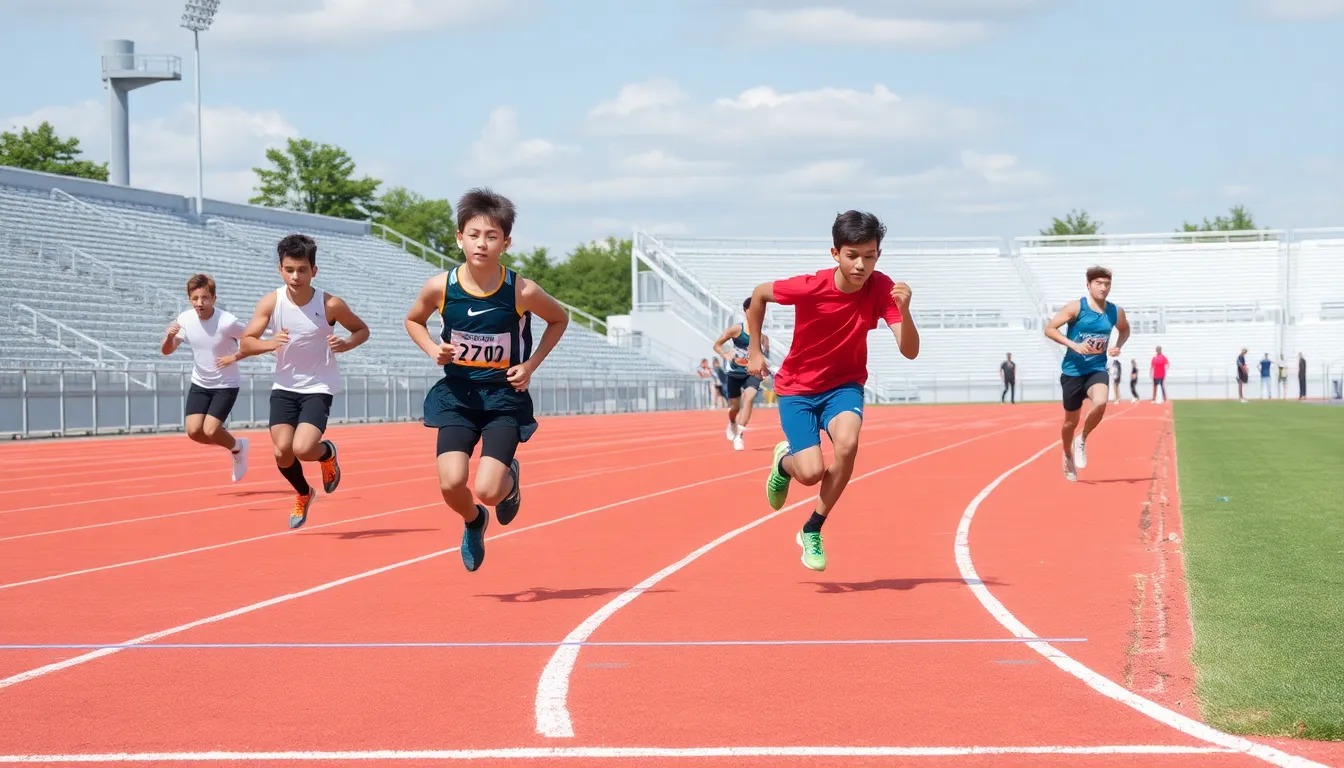
Athletics is a group of track and field events covering a wide variety of sports, with competitions featuring running, walking, jumping and throwing under different disciplines. The term "track and field" itself describes where these events take place: the contests in a meet are divided into track events and field events. In the track events athletes race against each other. The track used for outdoor running events measures 400 meters around.
The Three Main Categories
Track and field games are organized into three primary categories that test different athletic abilities:
- Running Events: Track events mainly consist of activities which test an athlete's running, endurance, agility, and speed capabilities
- Field Events: They often focus on the athlete's strength and agility rather than speed or endurance
- Combined Events: Pentathlon consisting of five events, heptathlon consisting of seven events, and decathlon consisting of ten events. In these, athletes participate in a combination of track and field events
Age Divisions and Competition Structure
Youth track and field games are organized by age to ensure fair competition. Youth Athletics events are for individuals age 6-18. Competitions are generally held in two year age groups, though some meets may combine age groups in smaller events. According to AAU standards, athletes MUST NOT turn 19 before the final day of the National Championship competition. Athletes who are eighteen (18) years of age through the final day of the National Championship shall be eligible to compete in the 17-18 Year Old age divisions.
Track Events: Running Disciplines
Track events form the heart of track and field games, encompassing everything from explosive sprints to grueling distance races. Understanding each event's unique demands helps athletes choose their specialty and train appropriately.
Sprints: Short-Distance Speed Events
Races over short distances, or sprints, are among the oldest running competitions. Sprinting events are focused on athletes reaching and sustaining their quickest possible running speed. The standard sprint distances include 100 meters, 200 meters, and 400 meters.
According to Nike's track and field guide, at the start of a sprint race, the runners in these events will have their feet in starting blocks — metal apparatuses that they use to explode off the line at the sound of the starter's signal. Sprinters are quick, of course, but to separate from the pack and become great, they need more than just raw speed. "In a short time, it gets very technical. When you get into the technicalities of trying to take a tenth of a second off your time, it takes a lot of work to do that," he said. Sprinters work on their starts, running form and techniques to shave fractions of a second from their times, which can make the difference between first and second place.
Middle-Distance and Distance Races
Middle-distance races require a balance of speed and endurance. The 800m is widely considered a highly demanding race due to its sustained high intensity. Meanwhile, the 1500m (the metric mile) is a tactical event where runners often conserve energy before a final surge on the last lap. These races demand strategic pacing and mental toughness.
Long-distance events like the 5,000m and 10,000m are primarily about aerobic thresholds and endurance. In these races, athletes often maintain close proximity, seeking advantageous positions. For young athletes, understanding distance measurements is crucial: The 5,000 meters, or 5 kilometers, is 3.1 miles long. The 10,000 meters, or 10 kilometers, is 6.2 miles long.
Hurdles and Steeplechase
Hurdling combines sprinting with jumping over barriers called hurdles. According to USA Track and Field standards, men's hurdles are 1.067 meters high for the 110-meter hurdles and 0.914 meters high for the 400-meter race. Women's hurdles are 0.84 meters high for the 100-meter hurdles and 0.762 meters high for the 400-meter distance.
The steeplechase is a unique endurance event. The 3000m Steeplechase is a unique event, featuring 28 fixed barriers and 7 water jumps. Touching the barrier is permissible, but falling in the water can negatively impact one's personal record.
Relay Races
The most prominent team events are relay races, which typically feature teams of four. Common relay distances include the 4x100-meter and 4x400-meter relays, where relay races are team events that require speed, precision, and teamwork.
Field Events: Jumps and Throws
Field events showcase explosive power, technical skill, and precise body control. The jumping and throwing events are won by those who achieve the greatest distance or height. Regular jumping events include long jump, triple jump, high jump, and pole vault, while the most common throwing events are shot put, javelin, discus, and hammer.
Jumping Events: Vertical Challenges
The high jump and pole vault are the vertical jumping events. There are four jumping events at a track meet: the high jump, the pole vault, the long jump, and the triple jump. The high jump and the pole vault are called vertical jumps. The athlete who jumps the highest is the winner.
In the high jump, participants take a run-up and jump as high as they can over a four-metre-long bar. Each competitor has three attempts per height that they choose to set and can also choose to move to a greater height without clearing the current one. Three consecutive failures to clear the bar will result in elimination.
The pole vault is even more technical. The vaulter jams the pole into a box below the bar they're trying to clear, and the pole bends. As it snaps back to straight, the pole flings the vaulter up in the air and — if they're successful — over the bar. As with the high jump, the vaulter with the highest bar cleared is the winner. Pole vaulters must also be very coordinated to sprint fast, jam the pole in the right spot and stay in position for the maximum height to be achieved.
Jumping Events: Horizontal Distance
For horizontal jumps, athletes sprint along a length of track that leads to a jumping board and a sandpit. The athletes must jump before a marked line and their achieved distance is measured from the nearest point of sand disturbed by the athlete's body.
The triple jump adds complexity. The triple jump involves three steps - the hop, step and jump. Participants sprint on a runway and launch themselves from the edge of a wooden board. They first land on their take-off foot (hop), then land their opposite foot (step) and finally jump into the sandpit.
Throwing Events: Power and Technique
Throwing events require strength, technique, and precision. They include the discus, shot put, javelin, and hammer throw. Each throwing event has specific rules about the throwing area and technique.
According to Olympic track and field regulations, the shot, discus and hammer are all thrown from the throwing circle. The javelin is thrown from a runway. If the athlete steps out of the throwing circle or runway during the act of throwing, the throw is considered a failed attempt. A valid throw must fall completely within the marked landing area. The athlete must not leave the circle or runway until the implement has touched the ground.
For the javelin specifically, the men's javelin is 2.6 to 2.7 meters long and must weigh at least 800 grams (1.76 pounds). The women's javelin is 2.2 to 2.3 meters long and must weight 600 grams (1.32 pounds) or more.
Combined Events: Testing All-Around Athletes
Combined track and field events are competitions in which athletes participate in a number of track and field events, earning points for their performance in each event, which adds to a total points score. Outdoors, the most common combined events are the men's decathlon and the women's heptathlon.
The Decathlon
The decathlon is a combined event in athletics consisting of 10 track and field events. Events are held over two consecutive days and the winners are determined by the combined performance in all. According to World Athletics, the decathlon is a combined ten-discipline track and field event held over two days. Athletes earn points for their performance in each event and the winner is the competitor that accumulates the most points across all disciplines.
The specific events are organized across two days. The decathlon consists of 10 events: the 100-, 400-, and 1,500-meter runs, the 110-meter hurdles, the discus and javelin throws, the shot put, the pole vault, the long jump, and the high jump. Traditionally, the title of "World's Greatest Athlete" has been given to the person who wins the decathlon. This began when Gustav V of Sweden told Jim Thorpe, "Sir, you are the world's greatest athlete" after Thorpe won the decathlon at the Stockholm Olympics in 1912.
The Heptathlon
The heptathlon is a combined track and field event that consists of seven disciplines across a two-day period. Competitors earn points for their performance in each discipline and the overall winner is the athlete who scores the most points.
For outdoor competition, the heptathlon consists of seven events: the 200- and 800-meter runs, the 100-meter hurdles, the high jump, the long jump, the shot put, and the javelin throw. The decathlon is contested mainly by male athletes, while female athletes typically compete in the heptathlon.
The Pentathlon
Due to stadium limitations, indoor combined events competition have a reduced number of events, resulting in the men's heptathlon and the women's pentathlon. For women's indoor competition, women compete in a pentathlon consisting of the following five events: 60 metres hurdles, high jump, shot put, long jump, 800 metres.
Essential Rules and Regulations
Understanding the rules of track and field games is crucial for both competitive success and safety. The rules of track and field events are all about promoting fair play among all participants. Athletes who are knowledgeable of these rules can create better strategies, allowing them to have the highest probability of winning their events.
Starting Rules and False Starts
For sprint events, the starting procedure is strictly regulated. Olympic hurdle and sprint races commence with the firing of the starting pistol. The starting commands are "On your marks" and "Set." Once all athletes are in the set position, the starting pistol is fired, officially starting the race.
False start rules have become increasingly strict. According to NBC Olympics, if a sprinter commences his or her starting motion from the set position before the starting pistol is fired, it is deemed a false start. The first false start of a race results in an automatic disqualification to the offending runner.
Lane Rules and Positioning
For all Olympic sprint and hurdle events, runners must remain within their pre-assigned lanes, which measure 1.22 meters (4 feet) wide, from start to finish. However, distance races have different rules. In Olympic distance events, there are no starting blocks. Runners begin in an upright position and their hands are prohibited from touching the ground. In Olympic distance races, there are no lane assignments so runners can break for position from the start.
Field Event Regulations
In jumping events, precision is crucial. Horizontal jumps include the Long Jump and Triple Jump. In both, if even the tip of an athlete's shoe crosses the edge of the take-off board, it is a scratch. For throwing events, in the long jump and throwing events (shot put, discus, javelin), competitors are allowed three attempts only.
Equipment and Surface Regulations
Starting blocks are mandatory for high-level 100m to 400m races. For track spikes, regulations have evolved. According to a science-backed guide, from 1 Nov 2024 World Athletics caps spike stack height at 20 mm for all track events. Thicker "super shoe" models built for roads are illegal on the oval — know the spec before buying.
Equipment and Gear for Young Athletes
Equipping young athletes properly is essential for both performance and injury prevention. In track and field, every fraction of a second and every inch counts. Success depends on dedication, training, and having the right equipment. High-quality, durable athletic track gear is crucial for athletes to perform at their best, for coaches to train effectively, and for schools to establish successful programs.
Track Spikes and Running Shoes
The most important equipment decision for young athletes is choosing appropriate footwear. According to Running Warehouse's beginner guide, when choosing your first pair of track spikes, fit and comfort should always come first. Your spikes should feel secure without feeling painful, with enough cushion and stability to protect your feet while your form is still developing · From there, just cover the basics: make sure your league allows spikes, use the standard 1/4 inch (6 - 7mm) pins, and avoid super stiff, stripped-down models at first.
For beginners, if this is your first year competing in track and field, a Multi-Purpose track spike works well for track & field running and jumping events. These spikes are affordable, durable, provide some cushioning, and are designed for use on dirt and all-weather rubber surfaces.
Age-appropriate usage is important. According to a track spikes guide, most kids can safely start around age 11-12 but only when they've developed proper running form. Additionally, even when your young athlete gets their shiny new spikes, they shouldn't live in them. Youth track spikes should only come out for specific speed work and competitions. I see kids wearing their spikes for entire practices and wondering why they've got shin splints by week three. These shoes are specialized tools, not everyday footwear.
Training Equipment Basics
Beyond spikes, young athletes need several key items. According to a parent's guide to youth track, proper footwear is essential for any runner. Lightweight running shoes with good grip are recommended for sprints and middle-distance races. For field events like long jump or high jump, specialized footwear may be necessary.
Other essential equipment includes:
- Starting blocks: Starting blocks are used for all hurdle, relay and sprint events. The starting blocks consist of two adjustable footplates attached to a rigid frame
- Relay batons: For team events, lightweight and durable batons ensure smooth exchanges
- Hurdles: Gopher offers an expanded assortment of starting blocks and hurdles for students focused on running events
- Throwing implements: Age and gender-appropriate shot puts, discuses, and javelins
What Parents Should Budget For
Track and field can be relatively affordable compared to other sports. According to youth track club information, the registration fee averages around $200 per season. If your Athlete is going to participate in the full summer season, you will need to purchase a custom Texas Stallions Uniform for an additional fee. There are also additional costs for meet entry during the season, as well as additional fees to cover travel to and participation in out of town meets.
For footwear specifically, you can expect a good track spike to be around $75. You can spend all the way up to $200, but those are far from a necessity for a vast majority of athletes.
Training Requirements and Competition Structure
Successful participation in track and field games requires structured training and understanding of competition formats. For young athletes just starting out, the approach should be developmentally appropriate and focused on building foundational skills.
Training Frequency and Structure
Youth track programs typically train 3-5 days per week. According to a middle school training program, The Middle School Track & Field Training Program is geared towards beginner and intermediate youth athletes and teams. The 10-week program contains both sprint and distance training plans that are based on running 4-5 days a week with a safe and gradual build up and intensity.
For more competitive programs, up to 3–4 days per week of training (1.5–2 hours each). Strength and conditioning sessions including weight room access. Coaching for meet preparation and seasonal race strategies.
Preseason Preparation
Building a strong foundation is crucial. According to coaching guidelines, even though newcomers to track and field may not yet know whether they're interested in running the mile or throwing the discus, strength training will improve overall athletic ability. You can later cater strength training to each athlete's ability. Endurance training during the preseason will also help the team, especially your runners.
An important aspect of preseason is event exploration. Preseason practice is a good time to help youth who are new to track and field figure out which events best suit their interests and abilities, so give them an opportunity to try everything from passing the baton to jumping the hurdles.
Season Structure
Track and field typically has multiple competitive seasons. Our outdoor track season begins in February and, depending on what qualification standards are met by the athlete, ends with the AAU Junior Olympics around the first week of August. Our indoor track season is the shortest and officially begins in December and ends in February.
Meet Day Expectations
College track athletes compete in a winter indoor season and a spring outdoor season. A typical track and field meet, such as the NCAA Indoor National Championships, takes place over the course of two or more days. Men and women compete at the same meets but are scored independently.
At youth meets, age divisions ensure fair competition. Youth competitions typically take place in two-year age divisions. These age divisions provide young athletes the opportunity to compete with other athletes of similar ability. Additionally, competitors in the 7-8, 9-10, and 11-12 divisions may compete in a maximum of three events per track meet, including relays.
Parental Involvement
Track and field often requires significant parental support. A parent or designated adult is required to be in attendance during all practices and meets. The coaches will be responsible for the athlete while on the track, however should a child need to leave the track for any reason, a parent or designated adult will need to take responsibility of the athlete.
Frequently Asked Questions
What age can my child start track and field?
Most organized youth track and field programs accept athletes starting at age 6-7, with competitions typically organized in two-year age divisions through age 18. However, spikes and more advanced training techniques should generally wait until ages 11-12 when proper running form is developed.
Do beginners need track spikes right away?
No. For first-year athletes, multi-purpose training shoes or basic running shoes are sufficient while they explore different events and develop proper form. Once they've identified their specialty events and developed good technique, event-specific spikes become beneficial. Multi-purpose spikes are recommended as a first spike purchase.
How many events should a young athlete compete in?
For younger age divisions (7-8, 9-10, and 11-12), athletes typically compete in a maximum of three events per meet, including relays. This prevents overuse injuries and allows proper rest between events. As athletes mature and specialize, they may focus on fewer events at a more competitive level.
What's the difference between indoor and outdoor track seasons?
Indoor tracks are typically 200 meters (half the distance of outdoor tracks) and feature banked turns. The season runs from December through February and includes some different events. Outdoor season runs from February through August and includes the full range of track and field events on standard 400-meter tracks.
How are combined events scored?
Combined events like the decathlon, heptathlon, and pentathlon use an international points scoring system. Athletes earn points based on their performance in each individual event, which are then totaled. The athlete with the highest cumulative score wins. Points tables are standardized and adjusted based on age and gender.
What should parents know about practice attendance?
Most youth programs require a parent or designated adult to remain at practice, especially for younger athletes (age 10 and under). Practice sessions typically last 1.5-2 hours and occur 3-5 days per week depending on the program's competitiveness level.
Are there scholarship opportunities in track and field?
Yes. Track and field offers significant scholarship opportunities at the collegiate level for both men and women across all event disciplines. Success at the high school and club levels can lead to recruiting opportunities, making early skill development and competition experience valuable.
What's the most important factor for youth track success?
Consistent attendance at practice, proper technique development, and gradual progression are more important than early specialization or expensive equipment. Young athletes should explore multiple events before specializing, build a strong foundation of general athleticism, and focus on enjoying the sport while developing skills.
Summary
Track and field games offer a comprehensive athletic experience encompassing running, jumping, and throwing disciplines that challenge athletes in diverse ways. The sport is organized into three main categories: track events (sprints, middle-distance, long-distance, hurdles, relays), field events (jumps and throws), and combined events (pentathlon, heptathlon, decathlon). Competition is structured by age divisions from 6-18 years old, with two-year groupings ensuring fair matchups.
For young athletes and parents entering the sport, understanding the basics is essential. Athletes should start with proper running shoes and multi-purpose spikes rather than expensive specialized equipment. Training typically occurs 3-5 days per week for 1.5-2 hours, with seasons divided into indoor (December-February) and outdoor (February-August) competition periods. Rules vary by event but emphasize fair competition, proper technique, and safety—including strict false start rules, lane regulations, and equipment specifications.
Success in track and field requires dedication, proper coaching, and age-appropriate training progression. Young athletes benefit most from exploring multiple events before specializing, developing proper form and technique, and building a foundation of general athleticism. With registration fees averaging $200 per season and spikes costing $75-200, track and field remains relatively accessible compared to many youth sports while offering valuable opportunities for physical development, competition experience, and potential collegiate scholarships. Parents should expect to remain present at practices for younger athletes and support their child's gradual progression through the sport's various discipline.