

Your Ultimate Guide to Youth Flag Football
Youth flag football is the non-contact version of American football, where instead of tackling, defenders pull a flag from the ball carrier's belt to stop the play. Think of it as a high-speed game of tag blended with all the strategy and skill of football. It’s an incredibly popular—and safe—alternative that’s getting kids excited about the game.
Why Youth Flag Football Is Exploding in Popularity
Once seen as just a casual backyard game, youth flag football has quickly become a major force in American sports. This isn't just a passing trend; it's a real shift in how parents and kids are approaching athletics. The focus has moved to skill development, teamwork, and most importantly, safety.
This guide will walk you through everything you need to know about this fast-growing sport, whether you're a parent, a new player, or a first-time coach.
A Safer Alternative with Soaring Numbers
The biggest reason for this explosion in popularity is the move to minimize contact in youth sports. Parents are looking for activities that offer the teamwork and physical benefits of football without the risks that come with tackling. The numbers don't lie.
Participation in youth flag football for kids aged 6-12 has shot up by 39% in just the last few years. By 2022, about 1 million children in this age group were playing flag football, compared to just 725,000 in tackle. That’s a huge flip from a decade ago when tackle football was far more common. You can discover more about this significant trend in youth sports to see the full picture.
This infographic breaks down the key data behind the sport's incredible growth.
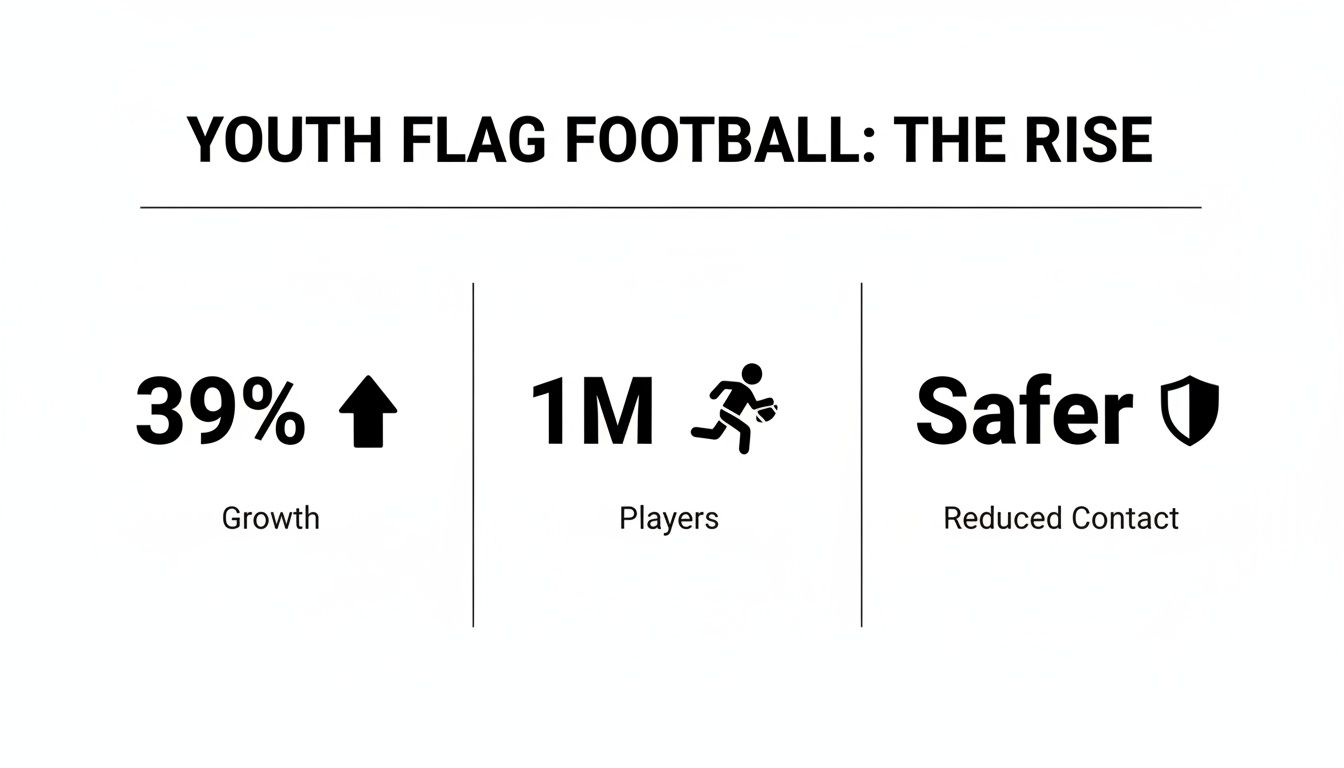
With massive growth and over a million players, it's clear that safety is a major factor drawing families to the game.
Youth Flag Football At a Glance
For parents new to the sport, it helps to see a direct comparison. Here’s a quick breakdown of how flag football stacks up against traditional tackle football.
| Feature | Youth Flag Football | Youth Tackle Football |
|---|---|---|
| Contact Level | Non-contact or minimal contact | Full-contact, tackling |
| Primary Action | Defenders pull a flag to stop a play | Defenders tackle the ball carrier to the ground |
| Safety Focus | High emphasis on avoiding collisions | Focus on teaching "safe tackling" techniques |
| Core Skills | Agility, speed, route running, catching | Blocking, tackling, strength, power |
| Team Size | Smaller teams (5-on-5 or 7-on-7) | Larger teams (11-on-11 is standard) |
| Field Size | Smaller, condensed fields | Standard full-size football field |
| Pace of Play | Fast-paced with continuous action | Slower, more strategic with breaks between plays |
This table shows that while both sports share a common DNA, flag football is built from the ground up to be a faster, safer, and more skill-focused game for young athletes.
What You Will Learn in This Guide
This guide is your complete playbook for getting started. We’ll cover everything from the basic rules and player positions to the essential gear your young athlete needs. You'll also learn about the huge benefits the game offers for physical, social, and mental growth, along with practical tips on how to find—or even start—a program right in your own community.
Understanding the Fundamental Rules and Formats
Getting started with youth flag football is a lot simpler than you'd think. You can toss out those thick, complicated rulebooks from tackle football. The core ideas here are designed for fast-paced action and, most importantly, fun. The entire game is built around one simple swap: replacing the tackle with a flag pull.

It’s pretty intuitive—when a defender pulls the flag off the player carrying the ball, the play is over. It's the exact same result as a tackle, but without the impact. This one change makes the game incredibly accessible and shifts the focus to speed, agility, and smart plays instead of physical force.
The Basics of Gameplay and Scoring
Every play kicks off with the center snapping the ball to the quarterback. From there, the offense gets a certain number of downs—usually four—to move the ball past a specific line, often midfield. If they make it, they earn a fresh set of downs to keep driving toward the end zone.
Scoring is also straightforward and will look familiar to anyone who's watched football, though with a few small tweaks:
- Touchdown: Scoring one gets you 6 points. This happens when a player carries the ball across the goal line or catches it in the end zone.
- Extra Point: After a touchdown, teams can go for more. A successful play from the 5-yard line earns 1 point, while scoring from the 10-yard line is worth 2 points.
- Safety: This is worth 2 points for the defense. It’s awarded if they pull the ball carrier's flag while they're still in their own end zone.
This setup keeps the game flowing and gives everyone on the field a shot at putting points on the board.
Common Formats and Field Dynamics
Most youth flag football leagues stick to two main formats: 5v5 and 7v7. The one your child plays will shape not just how many kids are on the field, but the whole strategy and feel of the game.
The 5v5 format is typically played on a smaller field, which really opens things up for a quick, high-energy game. With fewer players cluttering the field, there's a lot more open grass for receivers to run routes and for the quarterback to find a target. It's a fantastic setup for honing the absolute essentials like throwing, catching, and learning how to dodge defenders.
On the other hand, the 7v7 format uses a bigger field and adds a bit more complexity. Those extra players allow teams to run more creative offensive plays and set up more layered defenses. This version starts to feel a bit more like traditional football and is great for teaching kids more advanced strategic thinking.
No matter the format, the core idea is always the same: create a safe, fun environment where kids can build athletic skills, learn what it means to be part of a team, and simply fall in love with the game.
Getting a handle on these rules and formats is your first step to really enjoying the action from the sidelines. If you want to go a bit deeper, you can learn more about the complete flag football rules for beginners to get a full picture of how the game is structured. Either way, the heart of youth flag football is always about getting kids involved and helping them grow their skills.
One of the coolest things about youth flag football is that every kid on the field has a chance to be the hero. While the positions have the same names you'd hear in the NFL, the jobs themselves are a bit different—they're all about speed, smarts, and agility in a game that never stops moving.
Getting a handle on these roles is key for new players and parents alike. Think of it like a group project: each person has a specific task, but everyone has to work together for the whole thing to succeed. And because the teams are smaller, kids often get to try out a bunch of different spots, which is fantastic for building a well-rounded set of skills.
The Offensive Playmakers
The offense has one job: get that ball down the field and into the endzone. It all comes down to a few key players working in perfect harmony to make it happen.
- Quarterback (QB): This is the team's on-field leader. The QB calls the play, gets the ball from the center, and then has to decide in a split second whether to throw it to a receiver or hand it off. You need a good head on your shoulders and a solid arm to play QB.
- Center (C): The player who gets it all started. The center's main responsibility is to snap the ball cleanly to the quarterback to kick off the play. In most youth leagues, the center becomes a receiver right after the snap, making them a secret weapon.
- Wide Receiver (WR): These are the speedsters. Wide receivers run specific patterns, or routes, to shake their defenders and get open. Their goal is simple: create space, catch the football, and take off.
This trio is the engine of the offense. The center starts the action, the QB makes the call, and the receiver aims to finish the job with a big catch.
Key Insight: In youth flag football, being able to do a little bit of everything is a huge advantage. With smaller teams (often 5v5), players are constantly switching between offense and defense, sometimes on the very next play.
The Defensive Specialists
While the offense is trying to light up the scoreboard, the defense is there to shut them down. Their mission is to stop passes from being completed and, most importantly, to snatch the flag off the ball carrier.
A Defensive Back (DB) is the heart and soul of a flag football defense. Their primary job is to "cover" the wide receivers, shadowing their every move to keep them from catching the ball. If a pass is completed, their focus immediately shifts to chasing down the ball carrier and pulling their flag to end the play. It’s a position that requires serious speed, quick feet, and the ability to see the whole field at once.
The Real Benefits of Playing Flag Football
Beyond the pure fun of scoring a touchdown or snagging a game-saving flag, youth flag football delivers a whole host of benefits that help kids grow into confident, capable people. It’s way more than just a game—it's a training ground for life skills that matter long after the final whistle blows. The fast-paced, low-contact style of the sport creates the perfect environment for all-around development.
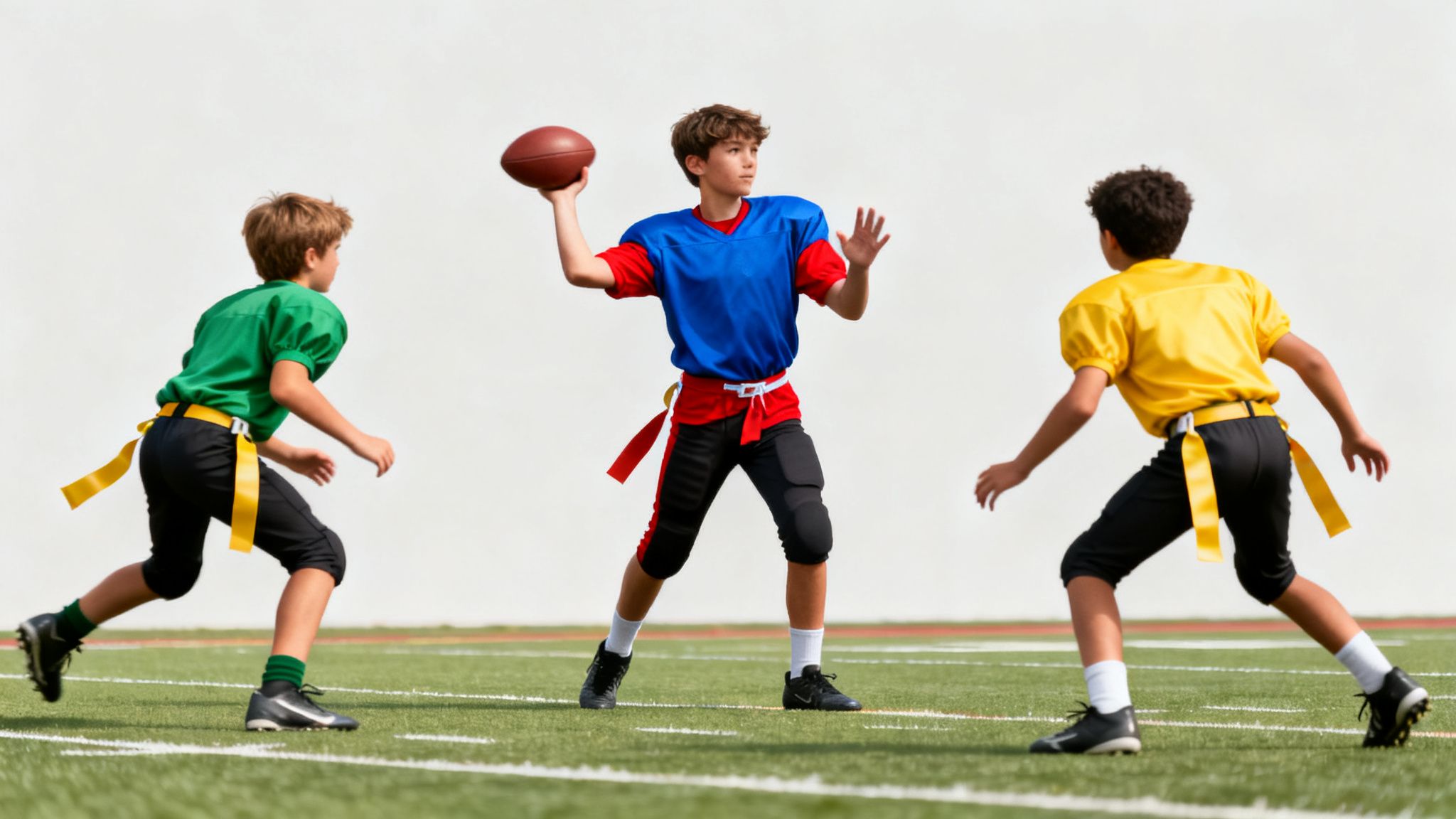
We see these advantages pop up in three key areas: physical growth, social skills, and mental strength. Each piece works with the others to build a solid foundation for success, helping kids learn to tackle challenges with a positive attitude.
Physical Agility and Coordination
Unlike traditional football, which can sometimes be about raw power, flag football is a game of finesse and control. It’s all about quick bursts of speed, sharp cuts, and solid hand-eye coordination. Players are constantly on the move—running, dodging, and switching directions—which is amazing for developing agility and balance.
This constant motion helps build a strong athletic base. Every catch, every flag pull, and every play executed requires a tight connection between what the brain is thinking and what the body is doing. These improved motor skills will help kids in any other sport or physical activity they decide to try.
Social Teamwork and Communication
In flag football, you can't be a one-person show. Every single successful play, whether it's a simple handoff or a tricky passing route, depends on teammates communicating clearly and trusting each other. Kids quickly learn to rely on one another, listen to their coaches, and pull together for a common goal.
This team-first setting teaches some incredibly valuable social lessons:
- Effective Communication: Kids figure out how to talk on the field to run plays and make quick adjustments.
- Shared Responsibility: They learn that everyone has a job to do, and the team only wins when everyone does their part.
- Good Sportsmanship: Learning to win with class and lose with grace is a huge part of the experience.
Playing on a team teaches children that their individual actions have a direct impact on the group. This sense of belonging and mutual respect is one of the most important takeaways from participating in a youth flag football league.
Mental Strategy and Resilience
The game is just as much a mental puzzle as it is a physical test. Quarterbacks have to read the defense in a split second and make smart decisions under pressure. Defenders need to anticipate what’s coming and react instantly. This sharpens critical thinking and problem-solving skills that are invaluable at school and in everyday life.
On top of that, the game teaches resilience. A dropped pass or a missed flag isn't a failure—it's a chance to learn, shake it off, and come back stronger on the very next play. If you're looking for more insight, you might be interested in our guide on the top benefits of joining a local youth team.
A Growing Platform for Girls
Youth flag football is also a wonderfully inclusive sport, and it's creating amazing opportunities for female athletes. Participation among girls has skyrocketed by an incredible 63% from 2019 to 2023, and the sport is now officially sanctioned in 15 states. You can learn more about the sport's explosive growth in girls' athletics on SI.com. This trend is knocking down old barriers and pushing for greater gender equity in sports.
So, you're ready to get your child in the game? Awesome. With flag football’s popularity exploding, there are more chances than ever for kids to join a team. For most families, the first step is finding a league that’s already up and running in your area.
The easiest place to start is often with a big, national organization. NFL FLAG has been a huge driver of the sport's growth, with a network of over 620,000 kids aged 4-17 playing on more than 1,600 teams across all 50 states. Their online league finders can point you to local programs in minutes, connecting you to a community that includes an estimated 2.4 million young players nationwide. You can learn more about flag football's incredible growth straight from the NFL.
How to Find an Existing League
Finding the right program is about more than just proximity—it's about finding the right fit for your family. A few simple steps can get you there.
- Check with Your Town: Your local parks and recreation department is a goldmine of information. They often run their own youth flag football leagues or can tell you about other local organizations they partner with.
- Look into Local Schools: More and more school districts are adding flag football as an after-school program or intramural sport. It's worth checking your district's athletics page to see what's available.
- Ask Around on Social Media: Hop into local parent groups on Facebook and ask for recommendations. You'll get honest feedback from families who are already in the trenches and know which leagues are great for kids.
Starting Your Own Program
But what if you look around and come up empty? Don't sweat it. You have the power to bring flag football to your own community, and starting an informal league is simpler than you might think.
Starting a new program is really about building a community from scratch. It all begins with a few passionate families and grows one player at a time, creating a fun, lasting opportunity for kids to just get out and play.
Your first move is to gauge interest. Talk to other parents at school pick-up, in your neighborhood, or at community events. Once you have a handful of interested families, you can get down to the basics: find a local park or school field to play on, grab some simple gear like flags and cones, and agree on a stripped-down set of rules. You don't need a fancy, complicated structure to get kids on the field and having a blast.
Essential Gear Your Young Player Needs
Getting your child geared up for flag football is refreshingly simple and won't break the bank. Unlike tackle football, the list is short and sweet, focusing on safety, agility, and comfort. The goal here is to keep things straightforward so your player can focus on having fun and learning the game.
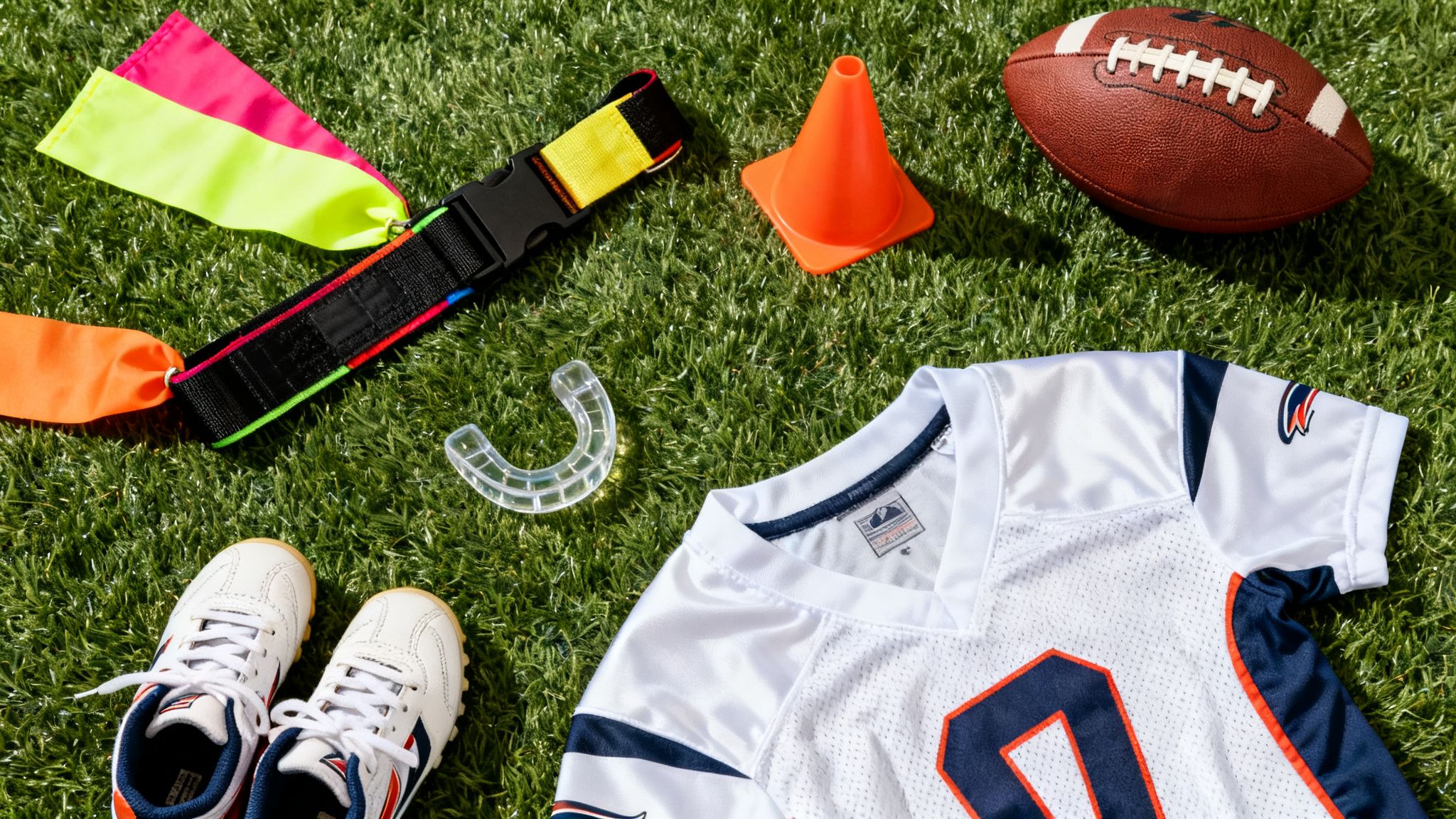
The most important piece of equipment, and what gives the sport its name, is the flag belt. You’ll see a few different styles, but the most common are clip-on belts or those with flags that attach via Velcro. For younger kids, clip-on belts are usually the way to go—they're easier to manage and keep the entire belt from falling off during a play.
Footwear and Protective Items
Good footwear is non-negotiable for preventing slips and falls on the field. While regular sneakers will work in a pinch, molded rubber cleats are a game-changer. They provide the grip needed for quick cuts and sharp turns on grass or turf, giving your child the stability to play confidently and safely. Just make sure to avoid metal spikes, as they aren't allowed in most youth leagues.
Also on the must-have list is a mouthguard. Even without tackling, accidental bumps with other players or tumbles to the ground are part of the game. A well-fitted mouthguard is a small piece of gear that does a huge job protecting your child's teeth, jaw, and tongue from injury.
A simple boil-and-bite mouthguard from any sporting goods store is an affordable and effective way to prevent dental injuries. It's a small investment that offers significant protection and peace of mind for parents on the sidelines.
Apparel and Optional Gear
Comfortable athletic clothing is pretty much all that's left. Most leagues provide a team jersey, so you'll just need a pair of shorts or athletic pants that don't have pockets. Pockets can be a real safety hazard, as fingers can easily get snagged during a flag pull. Look for lightweight, breathable fabrics that let your player move freely.
Some kids also like to wear football gloves to get a better grip on the ball, but they aren't essential, especially for beginners. As your child's skills develop, you might want to explore a more detailed breakdown of flag football equipment for youth players to see what else could be a good fit.
Common Questions from Parents and New Coaches
Jumping into any new sport for the first time is bound to come with a few questions. To wrap things up, we’ve put together the most common things we hear from parents and new coaches to give you clear, straightforward answers.
Think of this as your personal FAQ for getting started. We’ll cover those last-minute details so you can feel totally prepared when you hit the field for the first time.
What Is the Best Age for a Child to Start Playing?
Honestly, there’s no single "best" age. It really comes down to your child's interest and overall readiness. Most leagues, including big names like NFL FLAG, have programs starting for kids as young as four or five.
At that early stage, the entire focus is on having fun, developing basic coordination, and just getting a feel for being part of a team. The no-contact nature of flag football makes it the perfect introduction to the sport. It lets kids learn the fundamentals without the physical risks of tackling.
Is Youth Flag Football Truly a Safe Sport?
Yes, absolutely. Flag football is considered a very safe sport, especially when you compare it to traditional tackle football. The game was specifically designed to eliminate high-impact contact.
By swapping tackling and blocking for flag-pulling, the risk of serious injuries like concussions drops dramatically. The American Academy of Pediatrics even classifies it as a limited-contact sport. Of course, minor scrapes or sprains can happen in any athletic activity, but the rules are built from the ground up to keep players safe.
For a deeper dive, check out our complete guide on ensuring flag football safety for young athletes.
How Much Does It Cost to Play in a League?
One of the best parts about flag football is that it's pretty affordable. Costs can change depending on where you live and the specific league, but it's almost always easier on the wallet than tackle football.
Typical Cost Breakdown: Most registration fees land somewhere between $100 and $250 for the season. That fee usually covers a team jersey, a set of flags, and league administrative costs.
Beyond that, you’ll likely only need to pick up a mouthguard and a good pair of cleats. This lower cost makes the game accessible to a lot more families.
Is Flag Football a Good Starting Sport for My Child?
It's an excellent gateway sport for any kid. The rules are simple enough to pick up quickly, and the game is all about building core skills like running, catching, and throwing.
Because there’s no tackling, kids of all sizes and athletic abilities can jump right in and feel like they’re contributing to the team. It’s a fast-paced, inclusive environment that’s perfect for building confidence, making new friends, and developing a love for staying active.
At L2N2 LLC, we're here to support every player's journey, from their first practice to championship games. We offer performance-minded apparel and gear designed for comfort, durability, and style on and off the field. https://l2n2.store