

A Parent's Guide to Football Gloves Youth
Picture a young athlete, eyes wide under the stadium lights, arms outstretched for that game-winning catch. That split-second of pure confidence often comes down to the gear they're wearing. When it comes to football, a pair of high-quality youth football gloves isn't just an accessory—it's essential.
This guide is your playbook for navigating the world of youth gloves and finding that perfect pair.
Why the Right Gloves Matter for Young Players
Choosing the right football gloves youth players need is about so much more than just looking cool. It’s a decision that directly impacts their performance, safety, and confidence out on the field.
Think of gloves as specialized tools. You wouldn't use a hammer to turn a screw, right? The same logic applies here. A receiver making a delicate fingertip catch needs a completely different glove than a lineman battling it out in the trenches. The right pair should feel like a second skin, enhancing a player's natural talent, not getting in the way.
These gloves act as an extension of their hands, providing the tacky grip needed to reel in a tough pass or the padding required to protect their knuckles on the line. For a young athlete who is still dialing in their skills, a well-fitting glove can be the difference between a frustrating drop and a momentum-swinging play. It helps build the right muscle memory and reinforces good habits from the get-go.
Fueling a Growing Sport
The demand for specialized youth gear is absolutely massive. In the United States alone, a staggering 5.1 million youth hit the football field each year. This creates a huge market for equipment designed just for them.
On average, young players go through 1.2 pairs of gloves per season. Do the math, and you'll realize that means millions of pairs are sold annually just in the amateur leagues. This segment actually commands an impressive 80% market share and shows no signs of slowing down.
A great pair of gloves doesn't just help a player catch the ball; it gives them the confidence to expect to catch it. That mental edge is invaluable for a developing athlete.
This guide will walk you through everything, from the fundamental differences between glove types to the tech that gives them that "second-skin" feel. We’ll cut through the marketing jargon and help you make a smart choice, ensuring your young player has what they need to succeed. Just like having the right flag football equipment for youth players is critical for that sport, getting the gloves right in tackle football is a game-changer.
Receiver Gloves vs. Lineman Gloves
Not all football gloves are created equal. Just like a quarterback and a lineman wear totally different helmets, their gloves are built for completely different jobs on the field. Getting this first choice right is probably the most important step in setting your young player up for success.
Think of it like choosing between track spikes and steel-toed boots. One is made for pure speed and a light touch, while the other is all about brute force and protection. Picking the wrong one doesn't just hurt their game—it can be a safety risk. It's crucial to understand this difference before you even start looking at brands or cool designs.
The two big categories you'll run into are receiver gloves and lineman gloves, each designed specifically for the chaos their position brings.
Receiver Gloves: The Tools for Skill Positions
Receiver gloves have one mission: catch the football. These are the go-to for skill position players—think wide receivers, running backs, tight ends, and even defensive backs who need to snag interceptions. Their design is all about grip and flexibility, period.
The magic is in the palm, which is coated with a super tacky silicone material. This sticky surface gives players a massive advantage in securing the ball, especially on a tough catch or in bad weather. They're also incredibly lightweight and usually made from breathable stuff like spandex so a player's hands can move freely. The whole point is to feel the ball, and these gloves give that tactile feedback while adding that crucial sticky grip.
The big idea with receiver gloves is to boost a player's natural catching ability without getting in the way. They should feel like a second skin, giving a young athlete the confidence to know that the ball will stick.
Lineman Gloves: Armor for the Trenches
Lineman gloves, on the other hand, are built for battle. Worn by the big guys on the offensive and defensive lines, these gloves are purely about protection. Down in the trenches, hands are smashing into helmets, pads, and other players on every single play. Without the right gear, hand and finger injuries are almost a guarantee.
These gloves have serious padding across the back of the hand, knuckles, and fingers to absorb all that impact and prevent bruises and breaks. Unlike receiver gloves, the palm is usually a tough leather or synthetic material—sometimes with a little bit of tack, but not much. Their job isn't catching passes; it's blocking, pushing, and getting control of their opponent. They’re built rigid and tough to handle the sheer force of the line of scrimmage.
To give you a clearer picture, we can break down the key differences.
Glove Types at a Glance: Receiver vs. Lineman
| Feature | Receiver Gloves | Lineman Gloves |
|---|---|---|
| Primary Goal | Enhancing grip for catching | Protecting hands from impact |
| Palm Material | Tacky silicone (e.g., C-TACK) | Durable leather or synthetic |
| Padding | Minimal, lightweight padding | Heavy padding on back of hand |
| Flexibility | High flexibility, "second skin" feel | Rigid and supportive |
| Best For | WR, RB, TE, DB, QB | OL, DL |
This table lays it out simply: one is for skill, the other for sheer force.
This concept map breaks down the key things to think about when choosing any piece of youth football equipment.
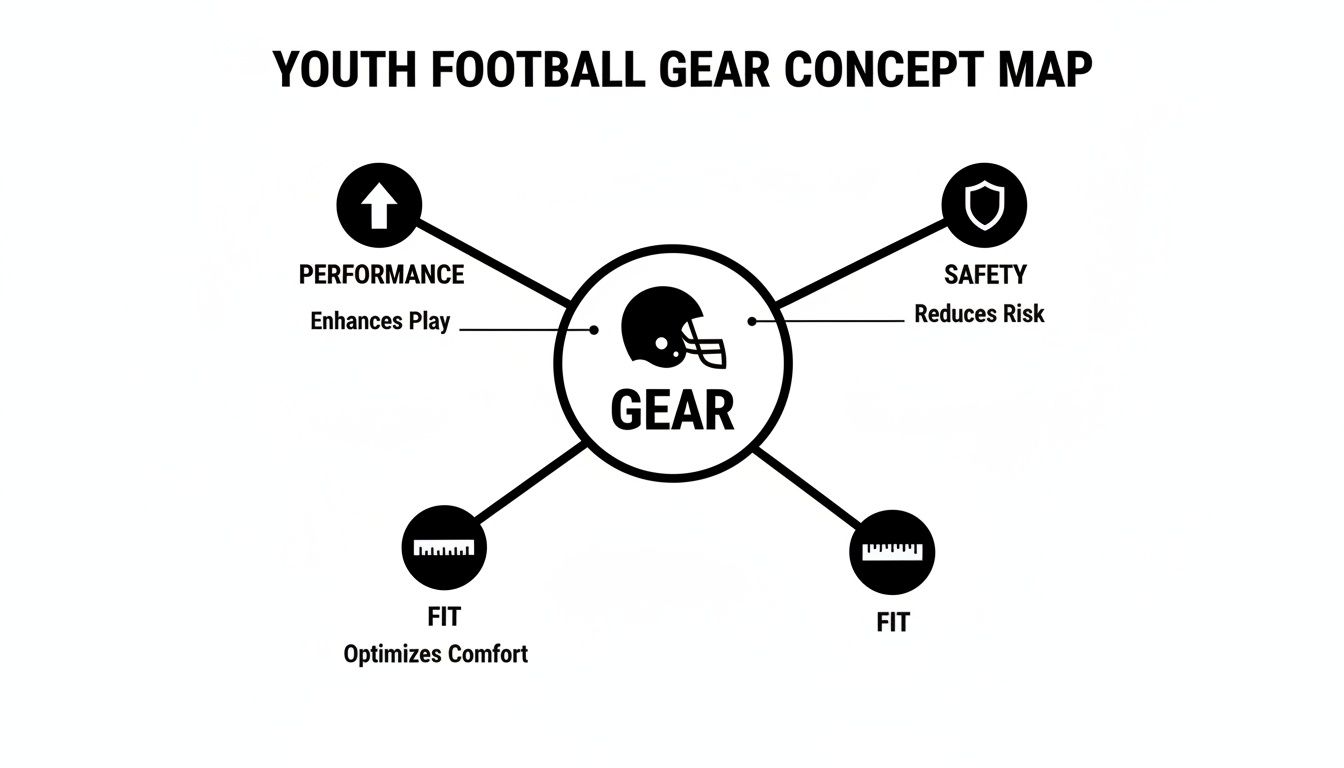
As you can see, the right gear always finds a balance between performance, safety, and a good fit. The difference between these two glove types is a perfect example of that principle in action.
What Makes a Great Football Glove
Ever wonder what separates a game-changing pair of football gloves youth players swear by from the ones that just sit in their gear bag? It's not just the flashy logo. It's all about the science and smart design packed into the palm and backhand.
The single most important feature for any receiver, running back, or QB is the grip. High-quality gloves feature a specialized silicone palm that acts a lot like the sticky pads on a gecko's feet. This material creates an insane amount of friction against the ball's pebbled surface, giving a young player a real edge when snagging a tough catch or holding on through a big hit. It's a massive confidence booster on every single play.
But a great glove isn't just a sticky palm. The back of the hand is just as crucial, and that's where you start seeing different materials for different jobs on the field.
The Right Materials for the Job
The material on the back of the glove is what determines its flexibility, breathability, and overall comfort. Most receiver gloves use lightweight, stretchy fabrics like spandex or Lycra blends. This is super important because it allows a player’s hands to move freely and naturally, without feeling stiff or restricted when they're reaching out for a pass.
These materials are also built for ventilation. You’ll often see tiny holes or mesh panels that let air flow through, which is a lifesaver for keeping hands cool and dry during hot practices. Sweaty hands are slippery hands, and good ventilation helps manage that moisture so the grip stays tacky.
The goal is simple: the glove should feel like a second skin, not a bulky piece of equipment. The right combination of grip, flex, and breathability is what makes that happen.
Built for All Conditions
The best gloves are also designed to perform when the weather turns nasty. Many top-tier models have weather-resistant coatings that help shed water during rainy games, keeping the palm from turning into a useless, slick surface. This ensures a player can count on their grip whether it's a perfect sunny day or a cold, drizzly Friday night.
Ultimately, picking the right glove means looking past the brand and checking out what it's made of. The youth sports world is booming, and the technology behind the gear is getting better every year. This market is expected to rocket from USD 57,157.12 million in 2025 to a staggering USD 122,017.77 million by 2034. That growth is pushing companies to innovate, especially in popular categories like receiver gloves, which are on track to be a USD 280 million market by 2025. You can dig into the numbers in this youth sports market analysis.
How to Find the Perfect Fit
Getting the right fit for a pair of youth football gloves isn't just a small detail—it's everything. A glove that’s too big will slide around and cause the palm to bunch up, making it nearly impossible to feel and control the ball. On the flip side, gloves that are too tight can cut off circulation and make it tough for your player to even flex their fingers.
What you're looking for is a snug, almost "second-skin" feel. That perfect fit gives a young player maximum control and comfort, and it all starts with one simple measurement.
How to Measure for Youth Football Gloves
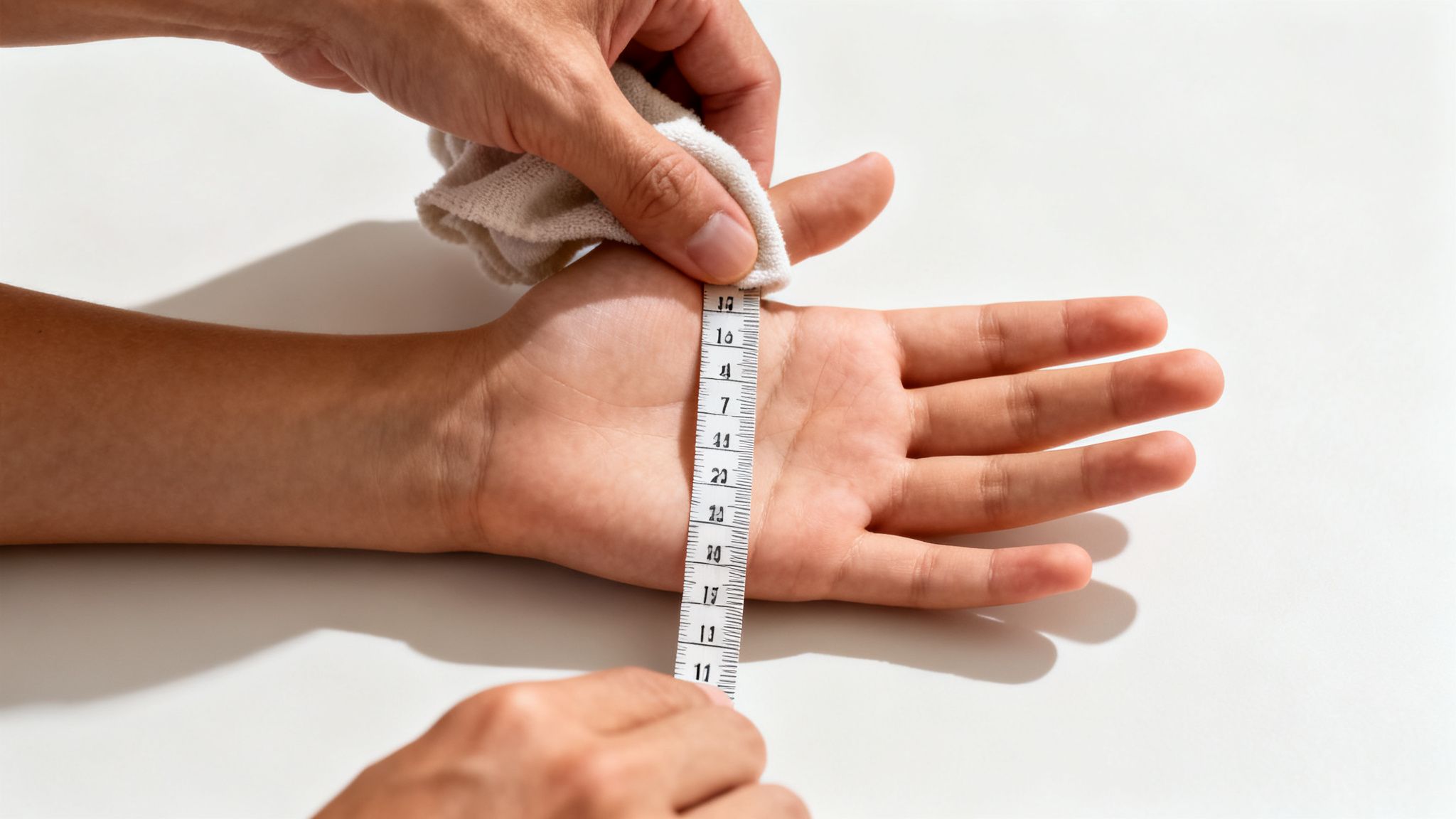
Don't worry, you don't need any fancy tools to get this right. A soft measuring tape is all it takes to find the perfect starting point for your player's glove size.
- Start at the Base: Have your player lay their hand out flat, palm up, with their fingers together.
- Measure the Length: Place the end of the tape measure right at the crease where their palm meets their wrist.
- Find the Tip: Run the tape straight up to the very tip of their longest finger, which is usually the middle finger.
- Record the Measurement: Jot down that number in inches. This single measurement is the key to unlocking the right size.
Using a Sizing Chart
Once you have that hand measurement, you can match it up against a brand’s sizing chart. While there can be slight differences from one manufacturer to another, most brands follow a pretty standard set of guidelines. This makes it much easier to shop online for great pairs like the Phenom Elite youth football gloves and feel confident you're getting the right fit.
To give you a head start, here's a general sizing guide to reference.
Youth Football Glove Sizing Chart (General Guide)
| Hand Length (Inches) | Youth Size |
|---|---|
| 6" – 6 ¼" | Youth Small (YS) |
| 6 ¼" – 6 ½" | Youth Medium (YM) |
| 6 ½" – 6 ¾" | Youth Large (YL) |
| 6 ¾" – 7" | Youth Extra Large (YXL) |
A quick word of advice: if your player's measurement lands right between two sizes, it's almost always better to go with the smaller one. Football gloves have a bit of stretch and will break in over time, and a snug fit is always better for ball control than a loose, sloppy one.
Making Your Gloves Last the Whole Season
A great pair of football gloves is a real investment in your young player's performance. But just like any other piece of high-quality gear, they need a little TLC to stay in top shape. With a few simple habits, you can protect that investment and make sure the gloves perform at their peak from the first game to the last.
The single biggest mistake you can make? Tossing them in the washing machine. The high heat and harsh tumbling are the worst enemies of a glove's grip. Machine washing can completely break down the tacky silicone palm, warp the glove’s shape, and cause the stitching to fall apart way too soon.
The Right Way to Clean Your Gloves
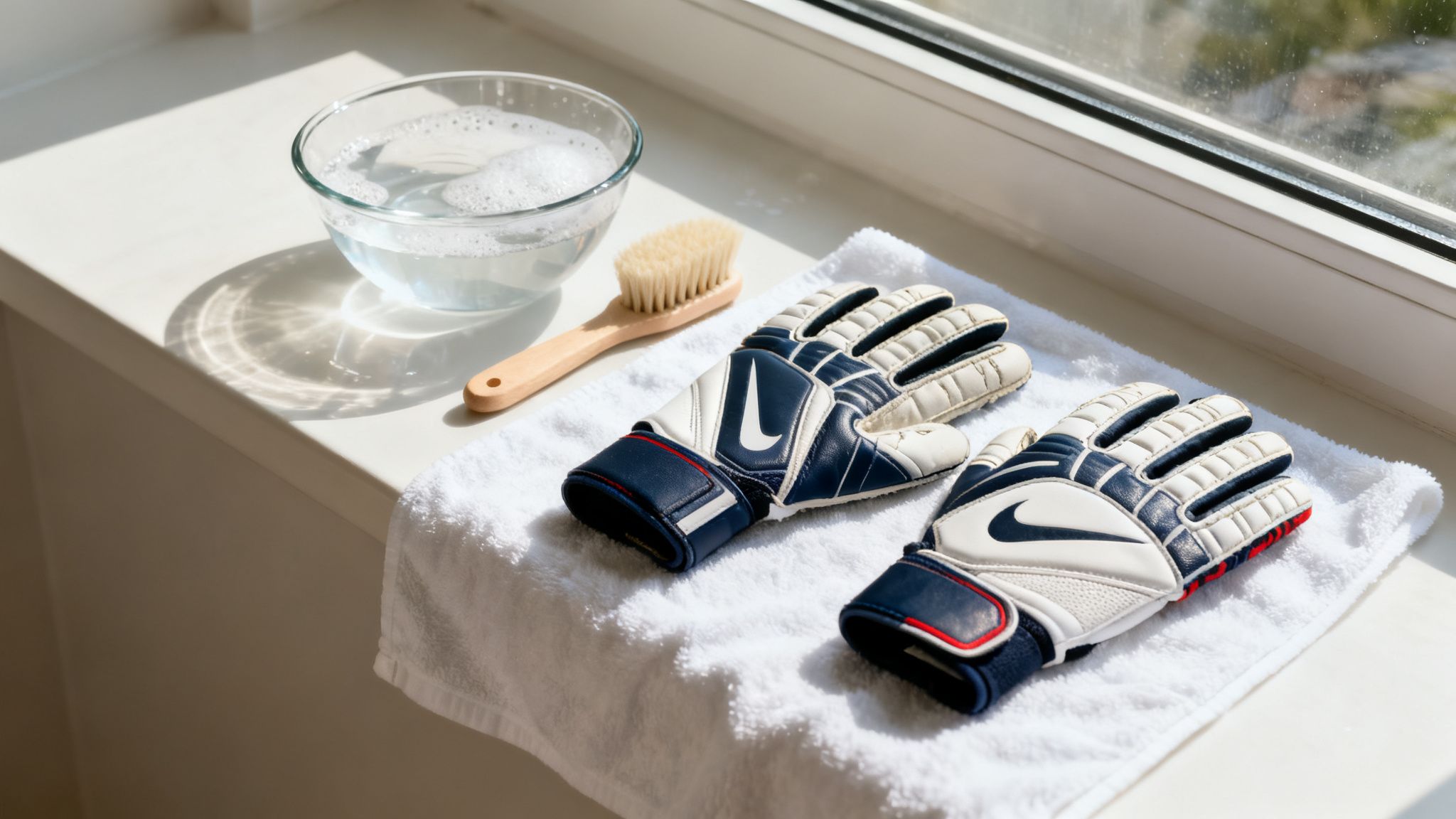
Cleaning football gloves is actually pretty easy, but it requires a gentle touch. Following a simple hand-washing routine after games or muddy practices will preserve their structure and keep that grip feeling fresh. This whole process only takes a few minutes but can add weeks—or even months—to the life of the gloves.
Follow these simple steps to wash them safely:
- Use Cool Water and Mild Soap: Fill a sink or a small basin with cool water and add just a tiny amount of mild detergent, like dish soap. Steer clear of harsh chemicals or bleach.
- Gently Wash the Palms: Submerge the gloves and use your fingers to gently rub away any dirt and grime from the palms and the back of the hand. You don't need to scrub aggressively with a brush.
- Rinse Thoroughly: Rinse the gloves under cool, clean running water until all the soap suds are gone.
- Squeeze, Don’t Wring: Gently squeeze out the extra water, starting from the fingertips and working your way down. Never wring or twist the gloves! This will absolutely damage the materials and seams.
The goal of cleaning is simple: just remove the surface layer of dirt and sweat that builds up on the palm. A clean surface lets the tacky material do its job.
Proper Drying and Storage
After washing, how you dry them is just as important. Never, ever put football gloves in a machine dryer. The intense heat will completely destroy the grip and can even cause the material to shrink or crack.
Instead, hang the gloves up to air dry in a spot with good air circulation, away from direct sunlight or a heater. You can clip them to a clothesline or just lay them flat on a towel. Stuffing them in a dark, damp gear bag is a recipe for mildew and will ruin them fast. Always let them dry completely before putting them away. A little bit of care really does go a long way.
Don't Get Benched: League Rules and Team Spirit
Before you pull the trigger on that perfect pair of football gloves youth players will go nuts for, there’s one last, crucial checkpoint: the rulebook. It sounds like a minor detail, but trust me, getting this wrong can lead to a major headache on game day.
Most youth and high school leagues have strict rules about gear. For gloves, this usually means they need a specific certification stamp to be legal for play. These stamps are a simple way for officials to know the gloves meet official standards for grip and construction, ensuring a level playing field for everyone.
Staying Within the Rules
When you're shopping, flip the glove over and look for one of two key stamps, usually right on the cuff or the back of the hand:
- NFHS: This stands for the National Federation of State High School Associations. If your kid plays high school ball or in a youth league that follows high school rules, this is the stamp you need to see.
- NOCSAE: The National Operating Committee on Standards for Athletic Equipment. This certification means the gear meets important safety and performance standards.
The absolute last thing you want is for a ref to tell your kid their brand-new gloves are illegal just minutes before kickoff. A quick check for that NFHS or NOCSAE stamp is all it takes to avoid the drama.
Showing Off Style and Team Pride
Once you’ve got the technical stuff squared away, you can move on to the fun part—making the gloves their own. Today’s football gloves are more than just performance gear; they’re a way for players to show some personality and build that all-important team unity.
Many brands and specialty shops let you add custom touches like a player's name, number, or even the team logo right onto the gloves. This is an awesome way for a young athlete to really feel a sense of ownership over their equipment and a deeper connection to their teammates. It helps build camaraderie and lets them flash a little personal style on the field. You can learn more about how gear builds team spirit in our guide to youth flag football.
This desire for performance and style is part of a massive global trend. The football gloves market was valued at an incredible USD 6.117 billion in 2024 and is expected to explode to USD 29.29 billion by 2033, with youth sports fueling a huge part of that growth. You can see more details about this growing market on Business Research Insights.
Common Questions About Youth Football Gloves
Even after you've done all the research, a few last-minute questions always seem to pop up before you hit "buy." It's totally normal. Getting those final details sorted out is the key to choosing a pair of gloves with confidence.
Let's walk through some of the most common questions we hear from parents and young players.
How Often Should We Replace Youth Football Gloves?
For most young athletes, a good pair of gloves will easily get them through a full season. But that can change depending on their position, how hard they play, and—this is a big one—how they're cared for after practices and games.
The single biggest sign it’s time for a new pair is the grip. If that sticky silicone palm has lost its tack, has big tears, or is starting to peel off, the glove just can't do its job anymore. A solid grip is crucial for both performance and safety, so once it's gone, it's time to retire them.
Are Receiver Gloves Good for Flag Football?
Yes, absolutely. Receiver gloves are perfect for flag football. The game is all about quick moves, catching the ball, and of course, pulling flags. Receiver gloves are built for exactly that—maximum grip and flexibility.
Using lineman gloves would be a huge disadvantage. They're way too padded and bulky for a game with no tackling, which would just get in the way of feeling the ball or grabbing a flag. If you have more questions like this, you can find tons of answers on our comprehensive FAQs page.
Think of it this way: In flag football, your hands need to be quick and precise. Receiver gloves are built for exactly that, while lineman gloves are built for protection in the trenches, which simply isn't needed.
Can You Make Old Gloves Tacky Again?
You can bring a little bit of life back to older gloves, but it's usually a temporary fix. Wiping the palms down with a damp cloth or a special glove wipe can clear off the dirt and dust, which often brings back some of the tackiness for a short while.
But here's the catch: it won't last. Once the silicone material itself is worn down or has peeled away, that original, out-of-the-box grip is gone for good. At that point, the safest and best move is to invest in a new pair. You want your player to have every advantage they can get on the field.
Ready to gear up with gloves that offer the perfect blend of performance, fit, and style? At L2N2 LLC, we provide high-quality athletic apparel and gear designed for the next generation of athletes. Explore our collection and find the perfect pair to help your young player dominate the game.